Addis Ababa — Africa’s Capital City
Addis Ababa, whose name means “New Flower” in Amharic, is one of Africa’s most dynamic cities and the continent’s diplomatic capital. Home to the African Union headquarters, the United Nations Economic Commission for Africa, and dozens of international embassies, Addis is a truly international city. Yet beneath the modern infrastructure lies an ancient culture, vibrant street life, and the warmth of Ethiopian hospitality that makes it a genuinely memorable destination.
Before heading to Addis, ensure your visa is in order. All international visitors (except Kenyan and Djiboutian nationals) need an Ethiopia eVisa. Apply online at evisa.gov.et — the 30-day tourist eVisa costs $62 and processes in 3 business days.
Getting to Addis Ababa
Addis Ababa Bole International Airport (IATA: ADD) is Ethiopia’s main international gateway and the hub of Ethiopian Airlines — Africa’s largest carrier by several metrics. Addis is one of the best-connected cities in Africa:
- Direct flights from London, Paris, Frankfurt, Amsterdam, Rome, Madrid, and other European cities
- Direct flight from Washington Dulles (IAD) — the only direct US-Ethiopia route
- Extensive connections across Africa, Asia, and the Middle East
Upon arrival at ADD, present your eVisa document and passport at immigration. The airport is located about 6 km south of the city center — taxi, ride-hailing app (Ride), or hotel transfers are the main options for getting into the city.
Getting Around Addis Ababa
- Ride app — Ethiopia’s equivalent of Uber; widely available and much safer/more transparent than negotiating with taxis
- Taxis — Available everywhere; negotiate the price before getting in
- Bajaj — Three-wheeled auto-rickshaws, cheap and good for short trips
- Light Rail Transit (LRT) — Addis has Africa’s first light rail system, connecting major corridors; inexpensive but gets crowded
- Walking — Manageable in some neighborhoods; use caution with traffic and uneven pavements
Top Attractions in Addis Ababa
National Museum of Ethiopia
Home to the fossilized skeleton of “Lucy” (Dinkinesh in Amharic), the 3.2-million-year-old Australopithecus afarensis found in Ethiopia’s Afar region in 1974. The museum also houses ancient Ethiopian artifacts, traditional art, and ethnographic exhibits tracing the country’s history. Located near the Addis Ababa University campus. One of Africa’s most significant natural history museums.
Ethnological Museum
Located in the former palace of Emperor Haile Selassie on the main university campus. Displays Ethiopia’s extraordinary cultural diversity across 80+ ethnic groups — traditional clothing, musical instruments, religious objects, and daily life artifacts. The Imperial Bedroom and Throne Room are preserved as they were during the Emperor’s residence.
Holy Trinity Cathedral (Kidist Selassie)
Ethiopia’s second most important Orthodox church after the Church of St. Mary of Zion in Axum. A beautiful structure with ornate interior decorations, stained glass, and gardens. The graves of Emperor Haile Selassie and Empress Menen are located here. The surrounding cemetery contains the tombs of patriots who resisted Italian occupation.
Merkato (Addis Ketema Market)
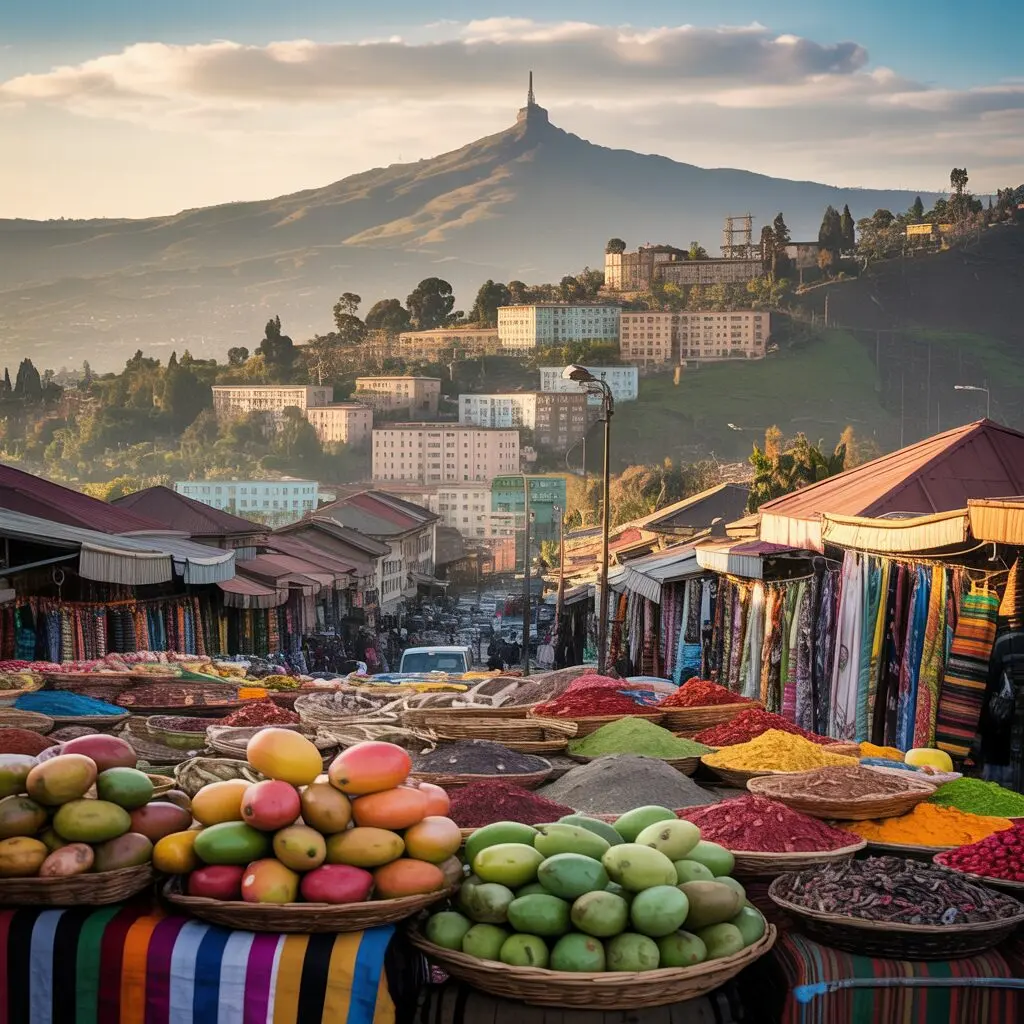
One of Africa’s largest open-air markets — a labyrinthine complex covering entire city blocks. Vendors sell everything from spices and coffee to electronics, fabrics, traditional medicines, and kitchenware. Visiting with a local guide or trusted contact is recommended as the area can be overwhelming for first-time visitors. Best experienced in the morning.
St. George Cathedral
One of Addis Ababa’s most important churches, dedicated to Saint George — Ethiopia’s patron saint. The current structure dates to 1896, built to commemorate Ethiopia’s victory at the Battle of Adwa against Italy. Haile Selassie’s coronation took place here in 1930.
Entoto Mountain
The eucalyptus-forested hills north of Addis Ababa rise to over 3,000 meters and offer panoramic views over the city. The historic Entoto Maryam church sits at the summit — Ethiopia’s earliest church on Entoto Hill. It’s also a popular hiking destination and escape from urban heat.
Addis Ababa Coffee Culture
Ethiopia is the birthplace of coffee, and Addis takes this heritage seriously. The traditional Ethiopian coffee ceremony (bunna) involves roasting green coffee beans over charcoal, grinding them, brewing in a clay pot (jebena), and serving three rounds of coffee in small cups. Many restaurants and traditional houses (tej bet) offer this experience. Top coffee neighborhoods include Tomoca, Kaldi’s Coffee, and countless local coffee shops.
Food in Addis Ababa
Ethiopian cuisine is one of Africa’s most distinctive. Meals are typically served on injera — a large, spongy sourdough flatbread made from teff — topped with various stews (wat) of meat and/or legumes. Eating is communal and hands-on. Must-try dishes:
- Doro wat — Spicy chicken stew with berbere sauce and boiled eggs; Ethiopia’s national dish
- Tibs — Sautéed meat (lamb, beef, or goat) with spices
- Kitfo — Ethiopian-style steak tartare, minced raw beef with spiced butter
- Shiro — Creamy chickpea stew; popular vegetarian option
- Tej — Honey wine; Ethiopia’s traditional alcoholic beverage
Practical Tips for Addis Ababa
- Altitude: Addis Ababa sits at 2,355 meters elevation — arrive prepared for mild altitude effects (drink water, rest the first day)
- Currency: Ethiopian Birr (ETB); ATMs widely available; USD is often accepted at hotels
- SIM card: Ethio Telecom is the primary provider; SIM cards available at the airport and throughout the city
- Safety: Central areas are generally safe; use common sense, avoid displaying valuables, and use the Ride app rather than flagging random taxis at night
- Tipping: Expected at restaurants (10%) and for guides
Frequently Asked Questions
Is Addis Ababa safe for tourists?
Addis Ababa is generally considered safe for tourists in most central and tourist areas. Normal urban precautions apply — watch your belongings, use reputable transportation (the Ride app), and avoid poorly lit areas at night. Check your government’s current travel advisory for the latest security information.
How many days do I need in Addis Ababa?
2-3 days is sufficient to see the main attractions in Addis Ababa. Many travelers use Addis as a base for day trips (Debre Libanos monastery, Blue Nile Falls nearby) and as a transit hub to Lalibela, Gondar, or the Simien Mountains.
Do I need a visa to visit Addis Ababa?
Yes — most nationalities need an Ethiopia eVisa. Apply at evisa.gov.et ($62 for 30 days). For full visa information, see our Ethiopia eVisa guide.
What currency is used in Addis Ababa?
The Ethiopian Birr (ETB) is the official currency. ATMs are widely available in Addis Ababa. USD is accepted at many hotels and tourist services. Keep small Birr denominations for markets and local eateries.